Documentation Center

Comprehensive audit-ready documentation and canister management

Version 129
Audit Documentation
Whitepaper, API specs, security assumptions, and threat model
Canister Management
Document repository with version control and audit trails
Open Verification
GitHub source code and blockchain contract verification
Audit-Ready Documentation
Comprehensive technical documentation for security audits, compliance verification, and open transparency
Version 129
Whitepaper
Complete
API Specs
9 Canisters
Security
Verified
Threats
Mapped
Technical Whitepaper
Formal technical overview of EnduranceProtocol V129 architecture, governance, and legal compliance
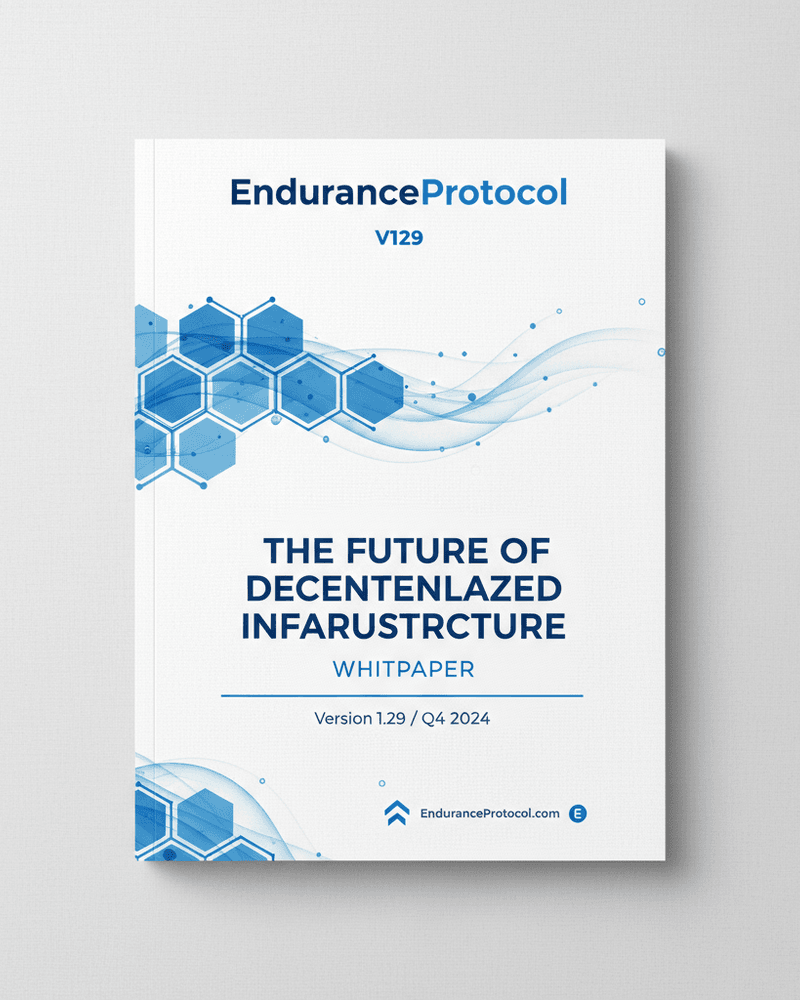
Whitepaper Cover

1. Protocol Overview

EnduranceProtocol V129 is a decentralized, non-custodial fund automation system deployed on the Internet Computer blockchain with cross-chain integration to Base Mainnet and Ethereum Mainnet.

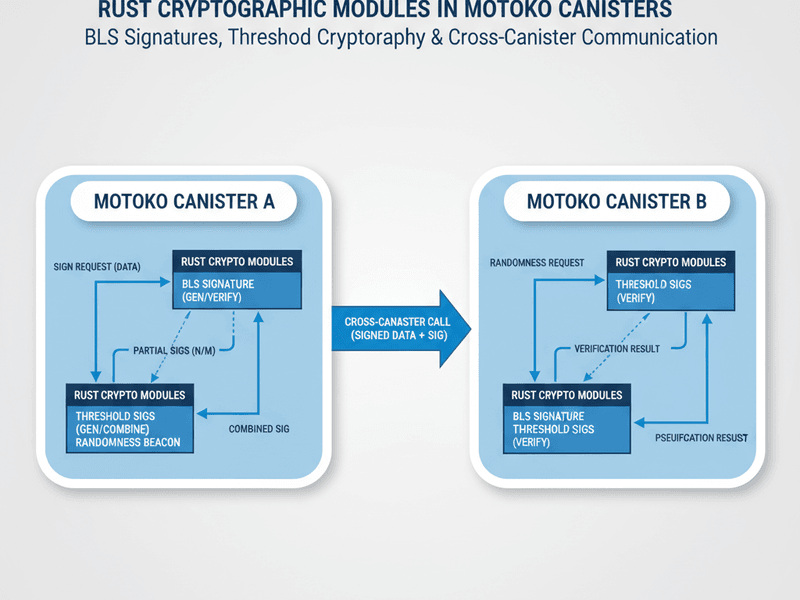
The protocol implements a federated canister architecture consisting of nine specialized Motoko canisters, enhanced with Rust cryptographic modules for advanced threshold BLS signature operations.

Core Characteristics:

  • Non-custodial design - no custody of user funds
  • No-yield system - regulatory-safe under NY law
  • Epoch-based USDC funding and payment management
  • Transparent 0.06% operational fee with harmonic split (9.63% / 90.37%)
  • Immutable PoweredBy DNA system for provenance tracking
  • Federated governance with cryptographic oversight

2. Federated Canister Architecture

The protocol employs a federated architecture with nine specialized canisters, each handling specific aspects while maintaining secure inter-canister communication:

1. Governance Canister

Central coordination hub with cryptographic oversight

2. Economic Management

Token operations with cryptographic security

3. Defence Canister

Security monitoring with threat detection

4. Treasury Reserve

Multisig fund management with BLS signatures

5. Access Control

Role-based permissions with cryptographic identity

6. BLS Cryptographic

Rust-based threshold signature operations

7. Documentation

Audit-ready documentation management

8. Analytics & Health

Performance monitoring and health tracking

9. Frontend Interface

User interface coordination and routing

3. Rust Cryptographic Integration

The protocol integrates Rust cryptographic modules for advanced threshold BLS signature operations while maintaining the core Motoko governance architecture:

Rust-Motoko Integration

Cryptographic Capabilities:

  • Threshold BLS signature generation and verification
  • Distributed key generation for multi-party security
  • Signature aggregation for efficient validation
  • Secure key management with memory protection
  • Candid interface bridge for Motoko-Rust communication
  • Asynchronous operation support with proper error handling

4. Non-Custodial Design Principles

The protocol is explicitly designed as a non-custodial system with no custody of user funds:

Non-Custodial Guarantees:

  • Distributed key management - no single point of control
  • Threshold signature requirements for all critical operations
  • Transparent on-chain operations with full auditability
  • User-controlled cryptographic keys and signature shares
  • No yield generation - regulatory-safe under NY law
  • Multi-party authorization without centralized control

5. Governance and Coordination

The Governance Canister serves as the central coordination hub with enhanced cryptographic oversight:

Cryptographic Policy Management

Manages policies for Rust-based cryptographic operations including threshold requirements

Threshold Signature Coordination

Coordinates threshold BLS signature operations across multiple parties and canisters

24-Hour Heartbeat System

Automated health monitoring and gravitational equilibrium analysis

Emergency Controls

Emergency controls for cryptographic operations including key revocation

6. Cross-Chain Integration

The protocol integrates with Base Mainnet and Ethereum Mainnet for USDC operations:

Base Mainnet

Primary deployment with BaseScan verification

Ethereum Mainnet

Secondary deployment with Etherscan verification

7. Legal Compliance

The protocol is designed for regulatory compliance under NY law:

Compliance Features:

  • Non-custodial design - no custody of user funds
  • No-yield system - no interest or yield generation
  • Transparent fee structure with harmonic split disclosure
  • Immutable audit trails for all operations
  • Open-source verification through GitHub
  • Public documentation for regulatory review

Last updated: January 2026 | Version 129

Open Verification
GitHub RepositoryView Source
Production DomainVisit Site
Base Contract VerificationBaseScan
Ethereum Contract VerificationEtherscan
Documentation Access

All documentation is publicly accessible for transparency and audit purposes. The audit-ready documentation provides comprehensive technical details for security auditors, compliance reviewers, and the community.

View on GitHub

Production Status

VERSION 164+ ACTIVE

Deployed at endurance-ocu.org

Vault Integrity with u128 arithmetic

Fee Structure

0.06% operational fee applied to all transactions

Split harmonically: 9.63% Creator Harvest (operational costs) and 90.37% Survival Reserve (protocol sustainability)

Legal & Attribution

Non-custodial, no-yield fund automation system

Regulatory-safe under NY law. No custody of user funds.

© 2025. Built with using caffeine.ai

Simulated Streaming Mode: Uses virtual transactions only with no real fund transfers.

Trust Weight & Law of Compounding: Purely symbolic metrics that do not affect financial operations or yield generation.

Dynamic Metrics: For performance monitoring only and do not affect financial operations.

Vault Integrity: u128 arithmetic ensures overflow-safe treasury operations with mathematical precision.